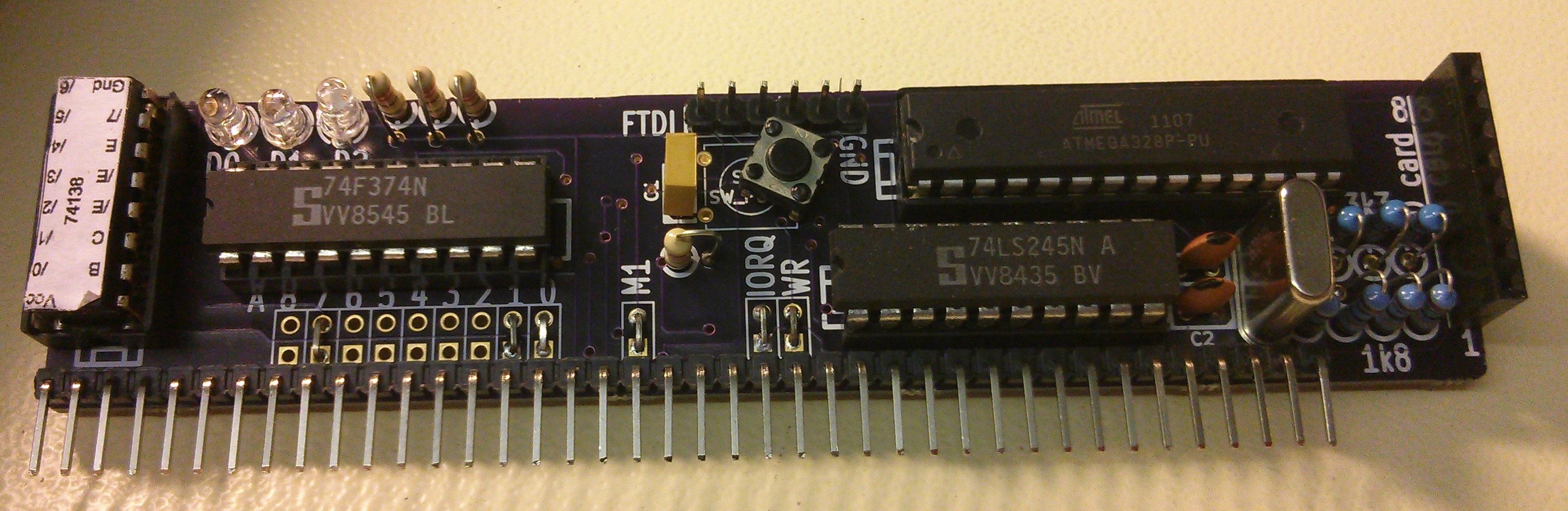
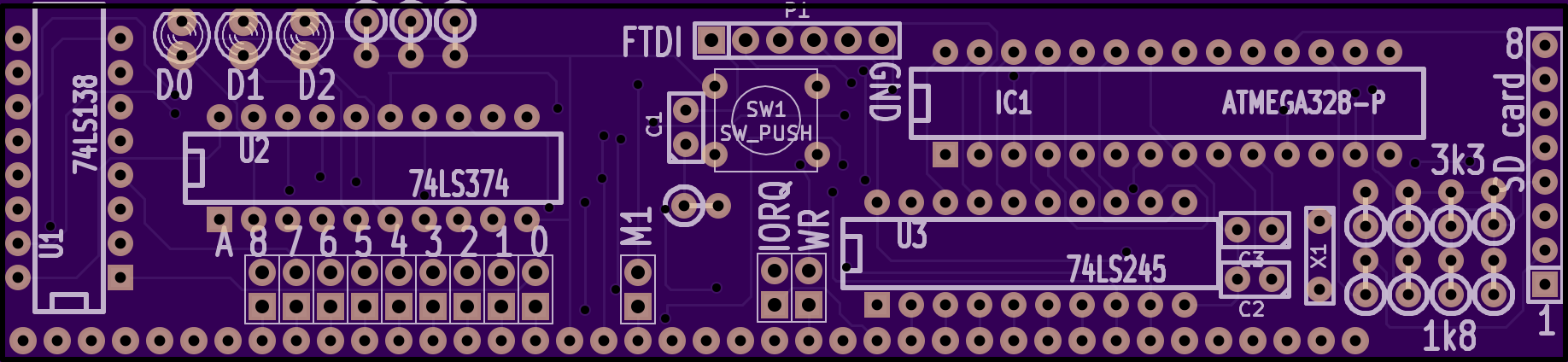
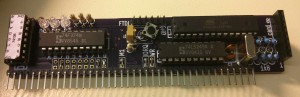
Just a quick update to about the SD Bootloader I designed a few posts ago. Well, the PCBs have arrived and last week I took a soldering iron to one of them and gave it a quick test
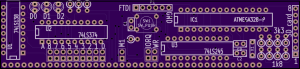
One side of the board is effectively an Arduino, so without plugging it in to the RC2014, I connected up an FTDI lead and uploaded the Arduino Blink sketch. A quick check with a multimeter and one of the pins was altenating between 5v and 0v. So far, all good!
So, the RC2014 is great. I can run Microsoft BASIC and program it from there, and as long as I am using a terminal emulator, I can copy & paste to save and load programs. Alternatively, I can write Z80 code using an online compiler then download it, copy it to USB stick, move it to my old Windows 2000 laptop (which has a parallel port) so I can burn it on to EPROM to see if it works, make adjustments and repeat with another EPROM. I will be the first to admit, however, that this is probably not the most efficient workflow. Not to mention the time and effort involved in wiping the limited stock of aged EPROMS. So, I am in the process of designing an SD Card based bootloader.
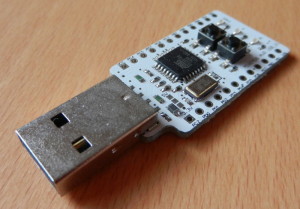
A little while back, Nottingham Hackspace got the opportunity to buy a bunch of Minimus V1 AVRs at a very good price. Not being one to turn down a bargain, I bought a few of these little critters to see what they can do. On paper, they look great. USB programmable micro running an Atmel chip similar to an Arduino (so possibly compatible with the Arduino IDE), in a package slightly bigger than your average USB stick but with a couple of buttons, LEDs and all the pins broken out.It turns out that there's a lot of misleading, conflicting, partial, out of date, or hard to follow info out there, not to mention that most of it is for the Minimus V2. I had the V1, so struggled to get it to do anything exiting at all for ages. After a very frustrating day of trying stuff, following dead links and generally wasting a lot of time, I got some joy with the Arduino IDE. To save you the hassle, read on for what worked for me.
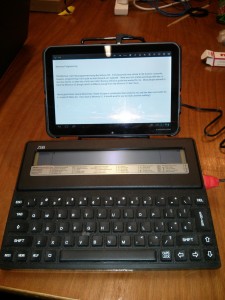
If you've been reading this blog in cronological order, you'll know about the FTDI adapter I made for the Z88. If you don't read this in order, you'll know about the Minimus programming I've been doing and what the Minimus is (note that I've not blogged about that yet... be patient!) Now to turn it in to something genuinely useful...
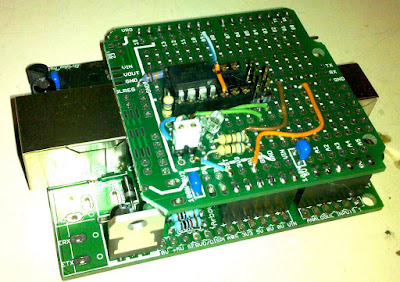
A while ago I started logging temperatures to Pachube via a Nanode. For the most part this works fine, but sometimes something breaks and I might lose a few hours or days worth of data. It might be the Nanode that's gone down, or Pachube, or (most likely) my Internet connection. So I decided to build a simple 3 stage external Watchdog Timer that would monitor the status of the feed and start taking steps to rectify it.
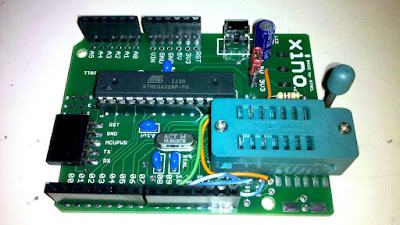
If you have seen my previous blog entry, you'll know I have been playing around with an ATtiny85 for an upcoming project (more on that later...). Using an Arduino (or, in my case a Xino from Ciseco) is easy enough, but when a sketch needs lots of tweaking to fine tune it, it means the ATtiny spends most of its time going in and out of the breadboard. So I decided to build a dedicated ATtiny programmer

 Now to turn it in to something genuinely useful...