So, once again Retro Challenge is upon us, and, yes, the timing is offset , but an April challenge should mean that more people are able to participate. To try and stay ahead of the curve this time, I thought I'd get in early and give my excuses for why I failed to complete the challenge this time around. I know most people leave this part until the very end, so hopefully I can impress the judges with my efficiency! The very first weekend in April was the UK Maker Faire in Newcastle (which was awesome, thank you for asking), so that took 3 days out of April for me. Then at Easter the Edinburgh Mini Maker Faire will also be robbing me of 3 days. And, finally, Vintage Computer Festival Europe is on from 29th April to 1st May. So, with travel and prep for these events, I feel like I'll be left with about 4.5 days in which to complete the challenge. Lets see how that works out...
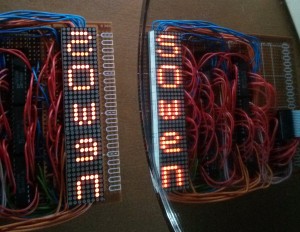
So, you may well remember that I entered Retro Challenge 18 months ago, and what a fun crazy busy time that was! Well, the January Retro Challenge competition is about to kick off in just over 2 weeks. If you're not familiar with Retro Challenge, shame on you! But you can de-shame yourself by heading over to http://www.retrochallenge.org/ and seeing what it's all about. Essentially, it's a month long bi-annual competition where the entrants set themselves a goal based around old school computing and blog, tweet and share their experiences. The goals are pretty loose, as long as they are based on something from last centuary (modern emulators of old kit is fine). The challenge I set myself was to take a breadboard based Z80 computer and bring it to life in modular PCB form in such a way that I could spell out my name on. Have a look back through my blog to see how I did. Spoiler ---->
So, before I dive in to this, a quick history lesson for those of you that aren't fully up to speed on your rare 80's vintage 8 bit computers. In the beginning, there was Clive Sinclair, and he invented the Sinclair ZX80. From the ZX80, the ZX81 and indeed home computing was born. From the ZX81 came the ZX Spectrum. Ok, so Clive didn't invent these single handed. He had a team working for him, which included Steven Vickers and Richard Altwasser. Somewhere between the initial design of the ZX Spectrum and its launch, Vickers and Altwasser thought there was a better way to do things, and left to set up their own computer company. Jupiter Cantab was formed in 1982, and Vickers and Altwasser developed the Jupiter ACE. This little computer was a weird mix of ZX80 (vacuum formed white case), ZX81 (black & white low res graphics, 3k memory) and ZX Spectrum (rubber keyboard, small speaker). The one fundamental difference, however, was that it used FORTH instead of BASIC as it's operating system. FORTH was much more efficient than BASIC, and would revolutionise the home computer market... Although history tells us it didn't. Cantab went bust after 18 months and was bought by Boldfield Computing, who went on to sell off the remaining hardware in 1985. Approximately 8000 units were manufactured. When I was offered an original unpopulated Jupiter ACE by John Fletcher, it was too good to turn down...
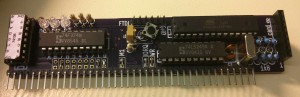
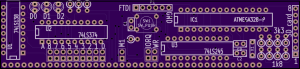
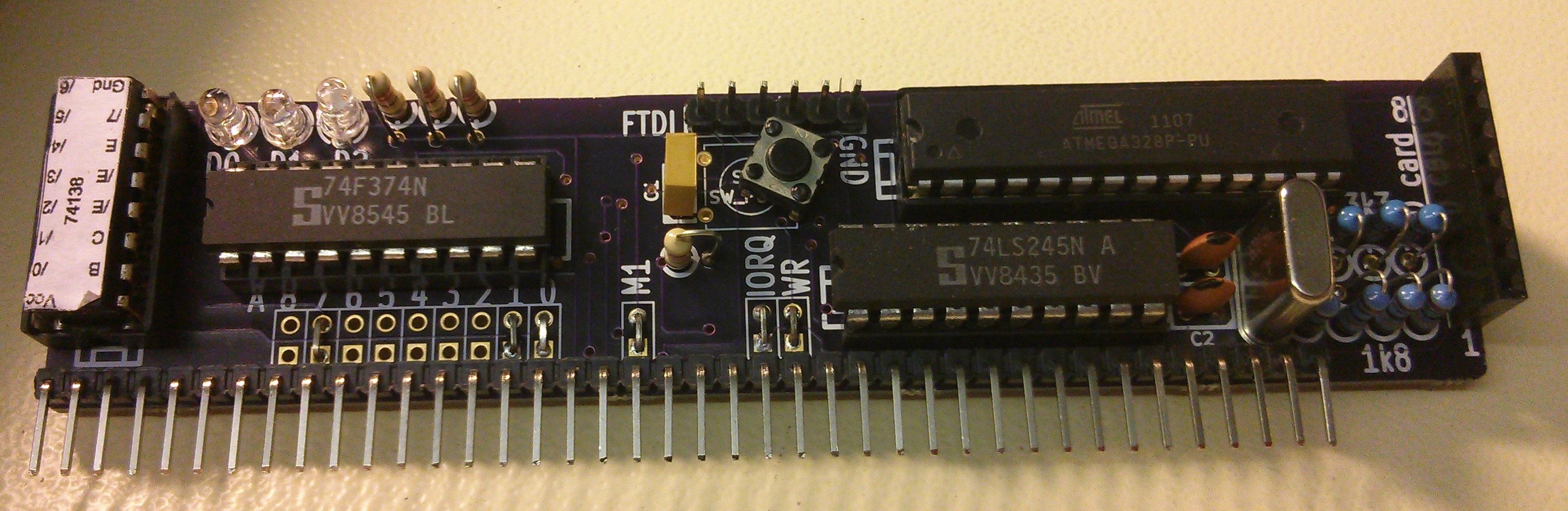
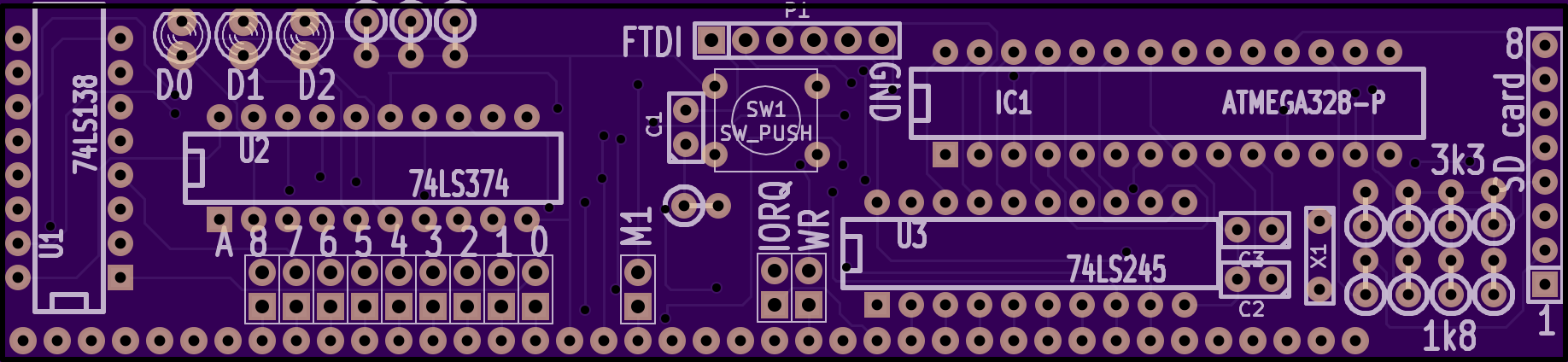
Just a quick update to about the SD Bootloader I designed a few posts ago. Well, the PCBs have arrived and last week I took a soldering iron to one of them and gave it a quick test
One side of the board is effectively an Arduino, so without plugging it in to the RC2014, I connected up an FTDI lead and uploaded the Arduino Blink sketch. A quick check with a multimeter and one of the pins was altenating between 5v and 0v. So far, all good!
So, the RC2014 is great. I can run Microsoft BASIC and program it from there, and as long as I am using a terminal emulator, I can copy & paste to save and load programs. Alternatively, I can write Z80 code using an online compiler then download it, copy it to USB stick, move it to my old Windows 2000 laptop (which has a parallel port) so I can burn it on to EPROM to see if it works, make adjustments and repeat with another EPROM. I will be the first to admit, however, that this is probably not the most efficient workflow. Not to mention the time and effort involved in wiping the limited stock of aged EPROMS. So, I am in the process of designing an SD Card based bootloader.
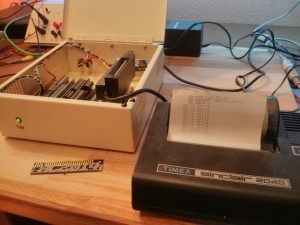
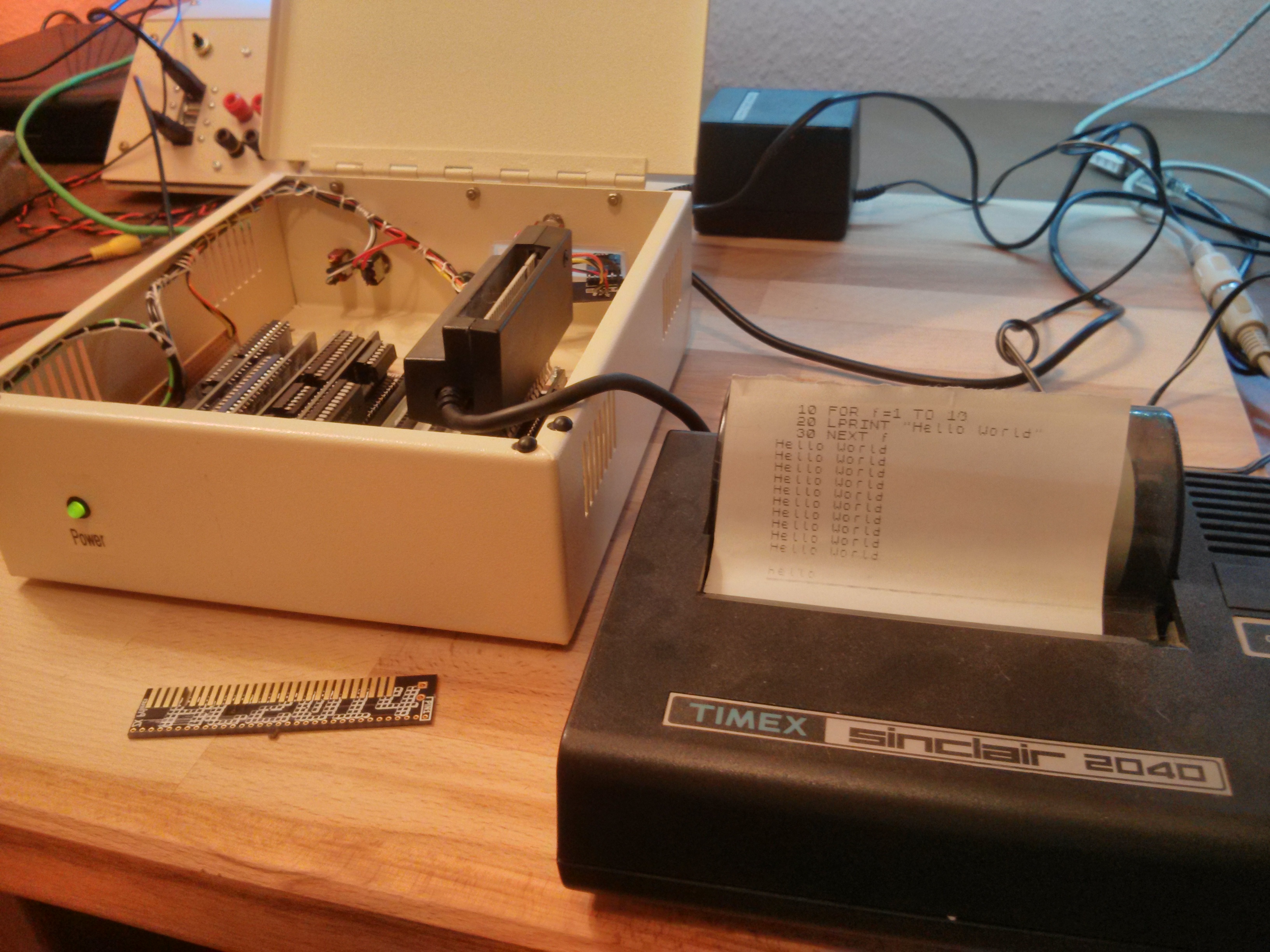
My original plan had never been to design and build my own computer. I had, however, planned to build a clone of the Sinclair ZX80, which has been on my bucket list of things to own for year, and which I had found plans for online. Whilst collecting the parts and reading up on simple Z80 computers I got kind of sidetracked and ended up with the RC2014. The heart of the RC2014 is a Zilog Z80 CPU, which is the same one that Sinclair used in the ZX80, ZX81, ZX Spectrum and Z88. If the ZX81 and ZX Spectrum can run a ZX Printer, then surely it follows that the RC2014 will be able to too?
I guess this is kind of a follow up to my Retro Challenge posts, as it was thoughts that stemmed from teaching myself Assembly Language for my Z80 project. Essentially it is a comparison between programming in the 70's and today against building with Lego in the 70s and today. But before I get stuck in, can you identify this famous TV family from a few crude Lego bricks?
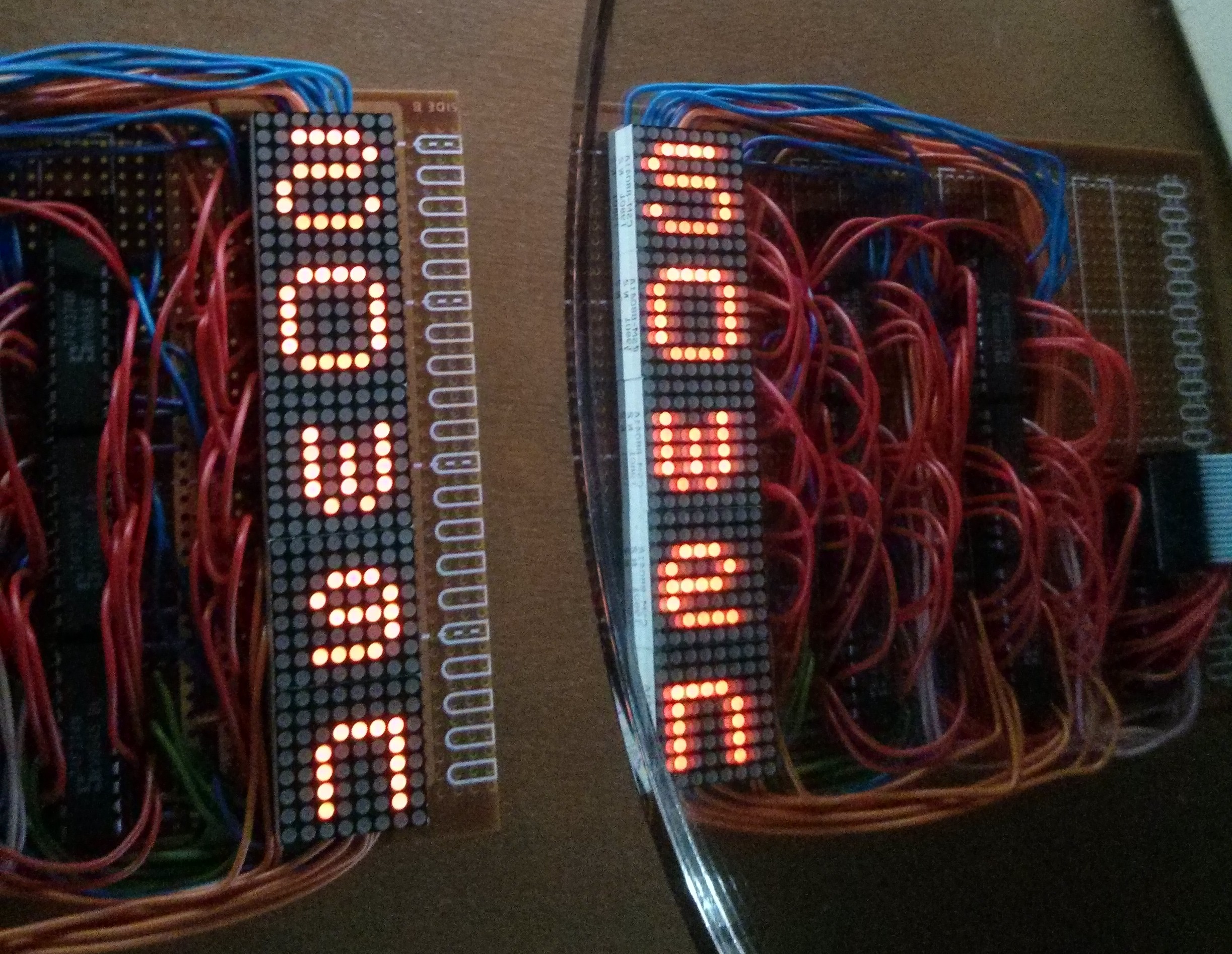
Wow! What an awesome month July has been. The whole Retro Challenge thing has been great, and despite moments of stress or despair, I have thoroughly enjoyed taking part and seeing what everyone else has been up to. Before I sum up my project, I should make a few honourable mentions. Retro Challenge - A huge thanks to Mark and Wgoodf do a great job in hosting this twice a year. Keeping everyone updated via Twitter has worked really well. Cheers guys! Grant Searle is responsible for the general Z80 design I used and also converted MS BASIC from the Nascom to run on this. Really, this project is a test of my understanding of Grants work and seeing how far I can take things. Nottingham Hackspace has an amazing "parts bin" that included the LEDs, Veroboard, case, some of the logic chips and the RAM I used. OSHPark did a great job (for a very good price!) on the PCBs - even if the postal system did keep me on the edge of my seat for a bit! Chris Gammell introductions to KiCad PCB design videos were critical in guiding me through the various stages of board design. Rodney Zaks book Programming the Z80 has been like a bible for me. Combined with a few dozen other resources of Z80 info on line I've been able to at least get the basics assembly language programming. CLRHome is a great online Z80 IDE that can compile assembly language in a variety of output formats including for the ZX Spectrum. I doubt I could have managed this in notepad! All of the other Retro Challenge entrants deserve a mention too, but there's a few that really caught my eye and taught me stuff about their particular approach to RC2014, such as Wgoodf - Turtles all the way down, Ians restoration of Northstar Horizon, Tezzas restoration and programming of Challenger 4P, John finishing work on Fahrfall

 Jupiter Cantab was formed in 1982, and Vickers and Altwasser developed the Jupiter ACE. This little computer was a weird mix of ZX80 (vacuum formed white case), ZX81 (black & white low res graphics, 3k memory) and ZX Spectrum (rubber keyboard, small speaker). The one fundamental difference, however, was that it used FORTH instead of BASIC as it's operating system. FORTH was much more efficient than BASIC, and would revolutionise the home computer market... Although history tells us it didn't. Cantab went bust after 18 months and was bought by Boldfield Computing, who went on to sell off the remaining hardware in 1985. Approximately 8000 units were manufactured. When I was offered an original unpopulated Jupiter ACE by John Fletcher, it was too good to turn down...