Raspberry Pi (6)
Slow Badger Movie Player
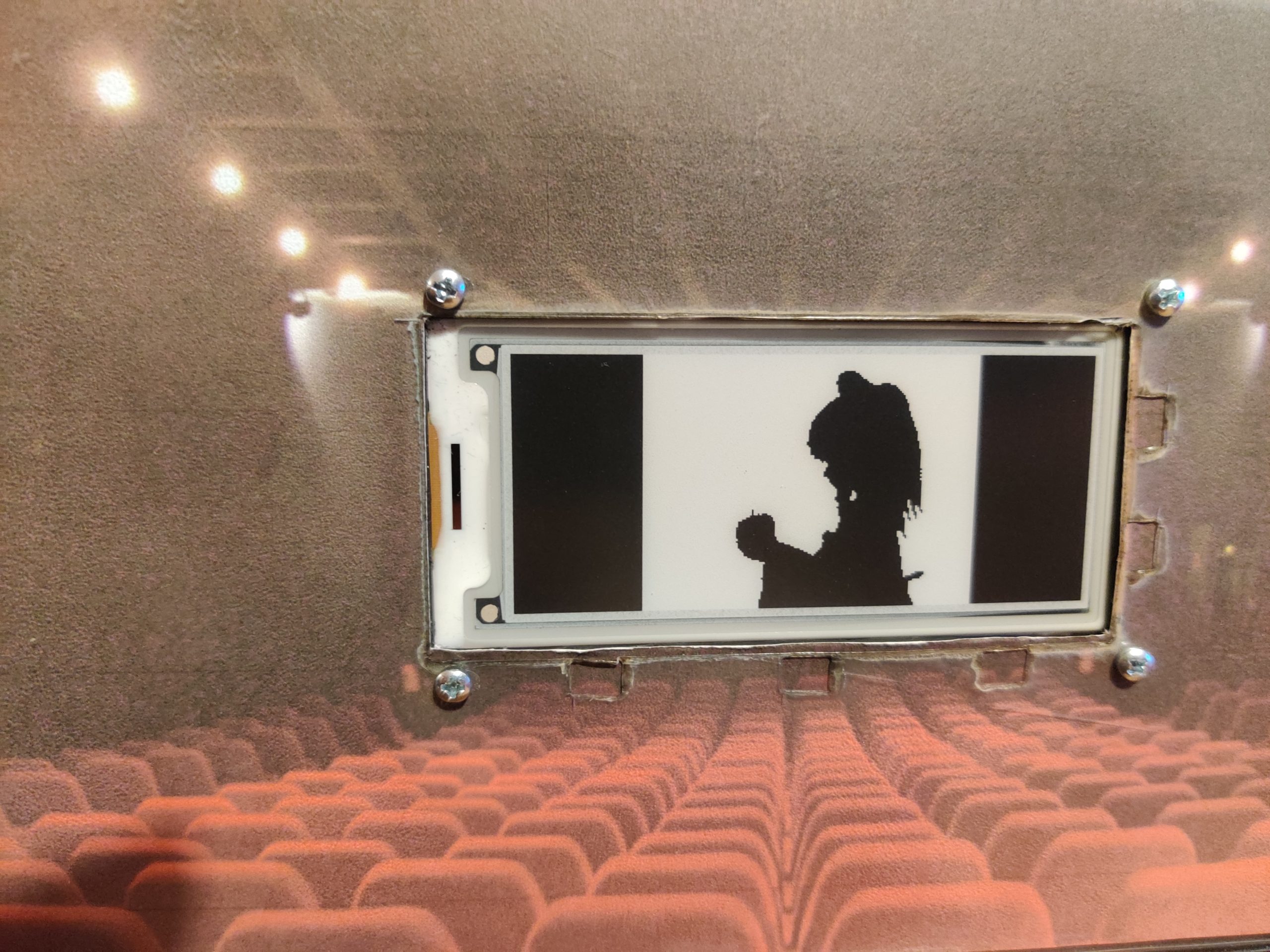
A couple of years ago I saw that somebody on the internet had made a Slow Movie Player, and that piqued my interest. The basic idea is that your favourite film is displayed on a screen at a really slow framerate. Eink displays are ideal for this as they use no power except for when updating the image. Their refresh rate is pretty poor compared to OLED displays, but if you're only updating once a minute, that's fine. A decent size eink display is pretty expensive though, so this idea went on the back burner.
Earlier this year, Pimoroni released the Badger. A small eink display with a built in RP2040 (Raspbrry Pi Pico) which was ideal as a programmable name badge - hence the name. This was really cool, although I didn't have a need for a name badge. This also went on the back burner.
Living With Linux - Making the switch
Just over a week ago, I took the plunge, and installed Ubuntu Linux on my main home computer. It's not the kind of decision I take lightly, and I've probably been building up to this for some 10 years or so. But a few recent events have told me that the time is now right for me to make the switch from Windows.
As an IT Engineer, I work with Microsoft products all day every day, and I used every version of Microsoft Windows since 3.11. Some with more success than others, but, as my Twitter followers will testify, I have not got on well with Windows 8. I had a pretty sweet set up with Windows 7, and thought I'd take advantage of the cheap £25 upgrade to Windows 8. That was probably the biggest mistake I've made! It broke software. It was slow. My hardware, despite being compatible didn't always work as planned. I struggled to find my way around. I was no longer in control of my own PC - Windows 8 was controlling me! It was driving me up the wall and it was time to change.
Raspberry Pi & Arduino Development Board
One of the great things about the Raspberry Pi is the general purpose input output (GPIO) pins. They allow it to interface with other circuits.
I've seen the future
I have seen the future of computers. Yes, really I have. What would you say if I said the future would be something about the size of a pad of paper. Which runs off of 4 AA batteries, giving it about 20 hours of use or 100 days of standby. Storage is solid state with no delicate moving parts, and can be expanded with plug in modules. Software and files can be stored on these modules or bought with pre-installed on. Built in apps include word processor, spreadsheet, database, diary, communications manager, alarm clock etc. Full size tactile physical QWERTY keyboard.
Smart TV - Raspberry Pi style
When I ordered my £25 Raspberry Pi, I didn't know what I was going to do with it, but when I heard that XBMC had been ported to run on the Pi I realized that I needed 2 Pis; one for XBMC, and the other so I could have one I didn't know what to do with!
First steps with a Raspberry Pi
I missed out on the chance to order a Raspberry Pi on launch day by a few minutes. No worries though, I could wait. After…