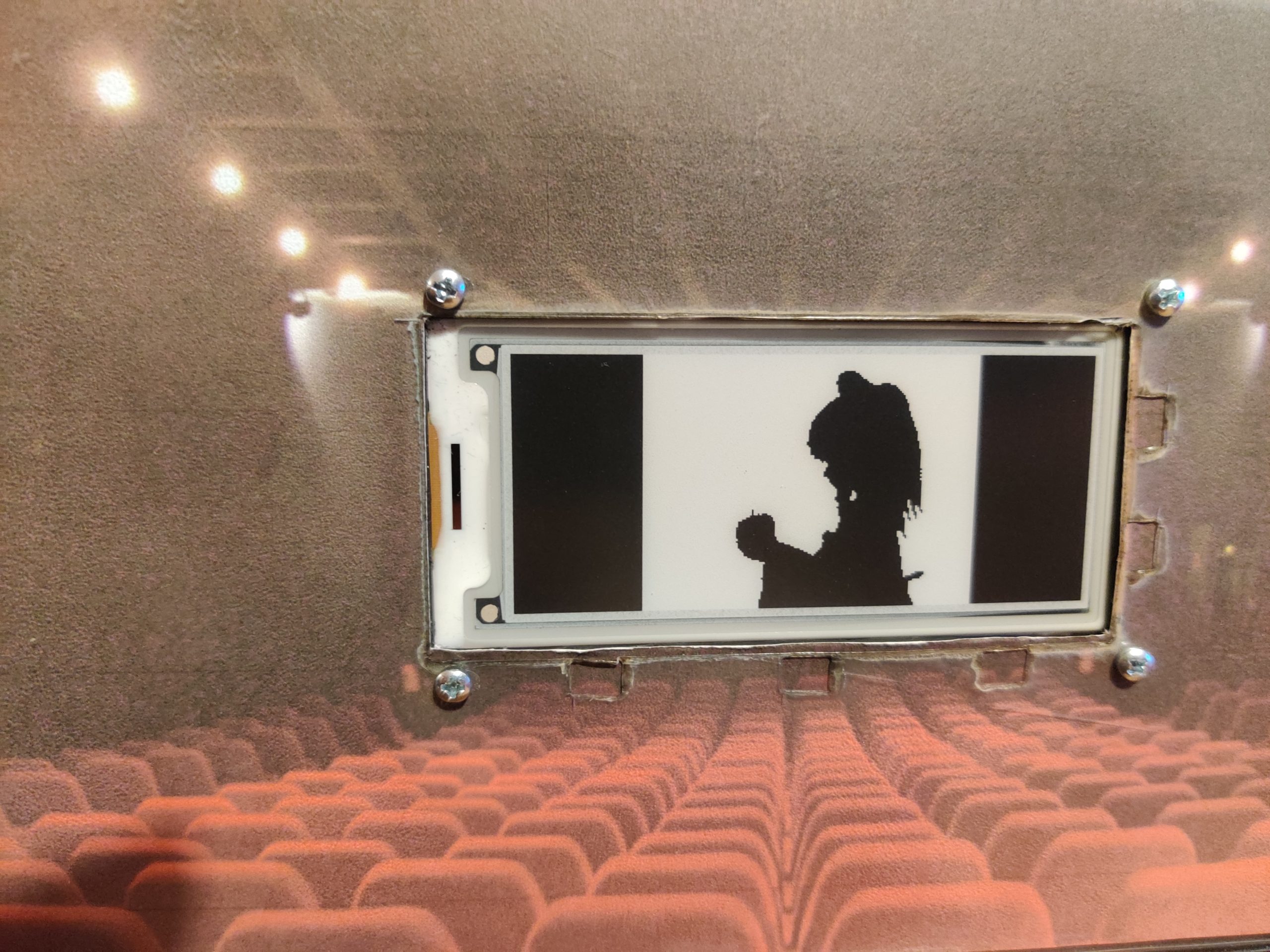
A couple of years ago I saw that somebody on the internet had made a Slow Movie Player, and that piqued my interest. The basic idea is that your favourite film is displayed on a screen at a really slow framerate. Eink displays are ideal for this as they use no power except for when updating the image. Their refresh rate is pretty poor compared to OLED displays, but if you're only updating once a minute, that's fine. A decent size eink display is pretty expensive though, so this idea went on the back burner.
Earlier this year, Pimoroni released the Badger. A small eink display with a built in RP2040 (Raspbrry Pi Pico) which was ideal as a programmable name badge - hence the name. This was really cool, although I didn't have a need for a name badge. This also went on the back burner.
So, before I dive in to this, a quick history lesson for those of you that aren't fully up to speed on your rare 80's vintage 8 bit computers. In the beginning, there was Clive Sinclair, and he invented the Sinclair ZX80. From the ZX80, the ZX81 and indeed home computing was born. From the ZX81 came the ZX Spectrum. Ok, so Clive didn't invent these single handed. He had a team working for him, which included Steven Vickers and Richard Altwasser. Somewhere between the initial design of the ZX Spectrum and its launch, Vickers and Altwasser thought there was a better way to do things, and left to set up their own computer company. Jupiter Cantab was formed in 1982, and Vickers and Altwasser developed the Jupiter ACE. This little computer was a weird mix of ZX80 (vacuum formed white case), ZX81 (black & white low res graphics, 3k memory) and ZX Spectrum (rubber keyboard, small speaker). The one fundamental difference, however, was that it used FORTH instead of BASIC as it's operating system. FORTH was much more efficient than BASIC, and would revolutionise the home computer market... Although history tells us it didn't. Cantab went bust after 18 months and was bought by Boldfield Computing, who went on to sell off the remaining hardware in 1985. Approximately 8000 units were manufactured. When I was offered an original unpopulated Jupiter ACE by John Fletcher, it was too good to turn down...
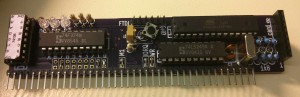
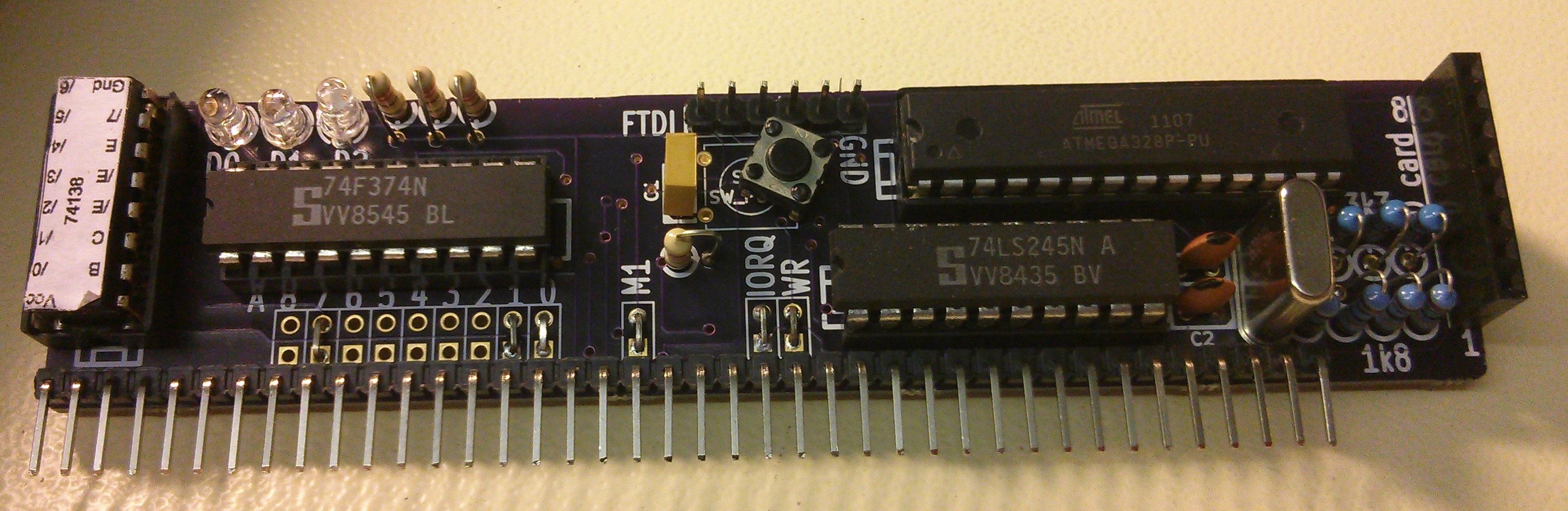
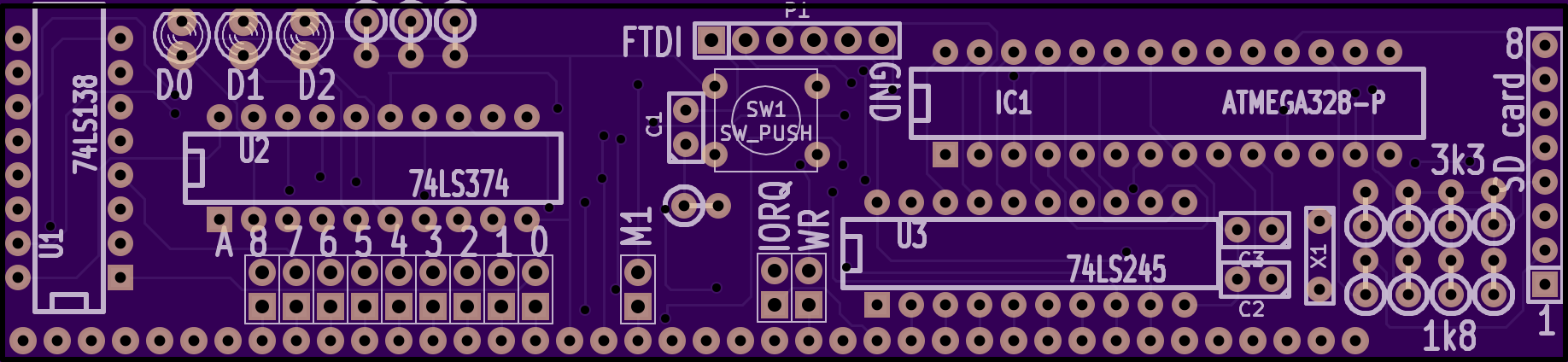
Just a quick update to about the SD Bootloader I designed a few posts ago. Well, the PCBs have arrived and last week I took a soldering iron to one of them and gave it a quick test
One side of the board is effectively an Arduino, so without plugging it in to the RC2014, I connected up an FTDI lead and uploaded the Arduino Blink sketch. A quick check with a multimeter and one of the pins was altenating between 5v and 0v. So far, all good!
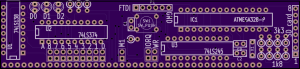
So, the RC2014 is great. I can run Microsoft BASIC and program it from there, and as long as I am using a terminal emulator, I can copy & paste to save and load programs. Alternatively, I can write Z80 code using an online compiler then download it, copy it to USB stick, move it to my old Windows 2000 laptop (which has a parallel port) so I can burn it on to EPROM to see if it works, make adjustments and repeat with another EPROM. I will be the first to admit, however, that this is probably not the most efficient workflow. Not to mention the time and effort involved in wiping the limited stock of aged EPROMS. So, I am in the process of designing an SD Card based bootloader.
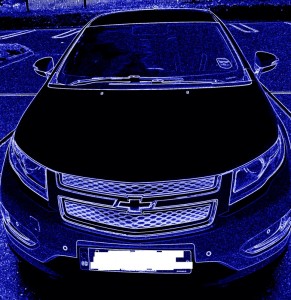
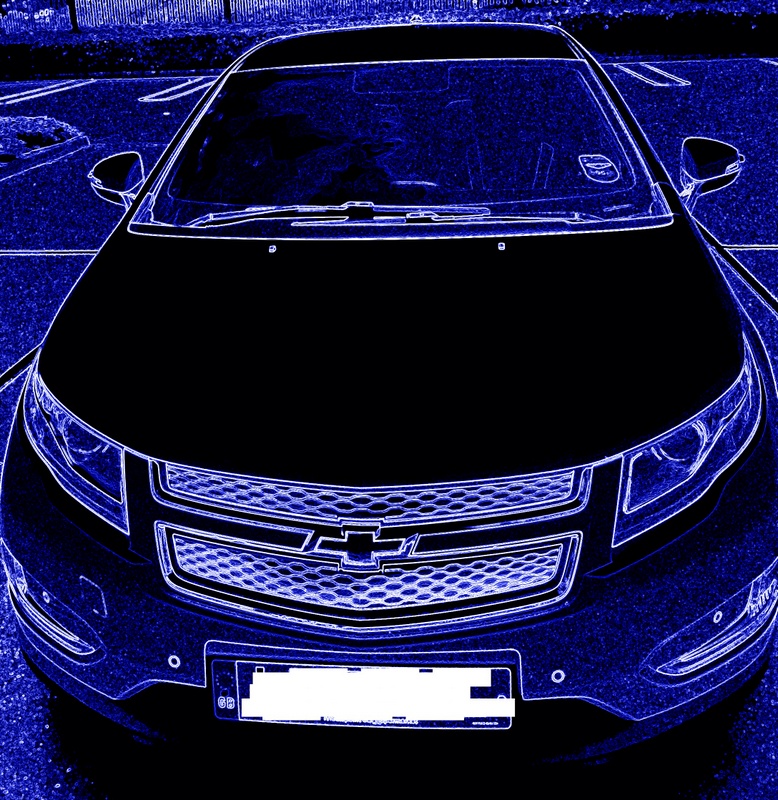
As a child growing up in the 1970s, I had no idea of what the future held. I didn't know if Mr Benn would be able to get back from his adventures, or if Scooby Doo could catch the Evil Swamp Monster, or even if we were going through the round or square window in PlaySchool. But there were some things about the future that was pretty certain. We would all have robot butlers, go on holiday to the moon and drive electric cars! So, as I drove to work this morning in my electric car, wondering when my moon tickets would drop through the letterbox, I realised that maybe, just maybe, I am already in the future
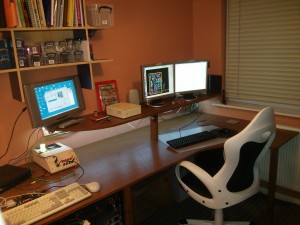
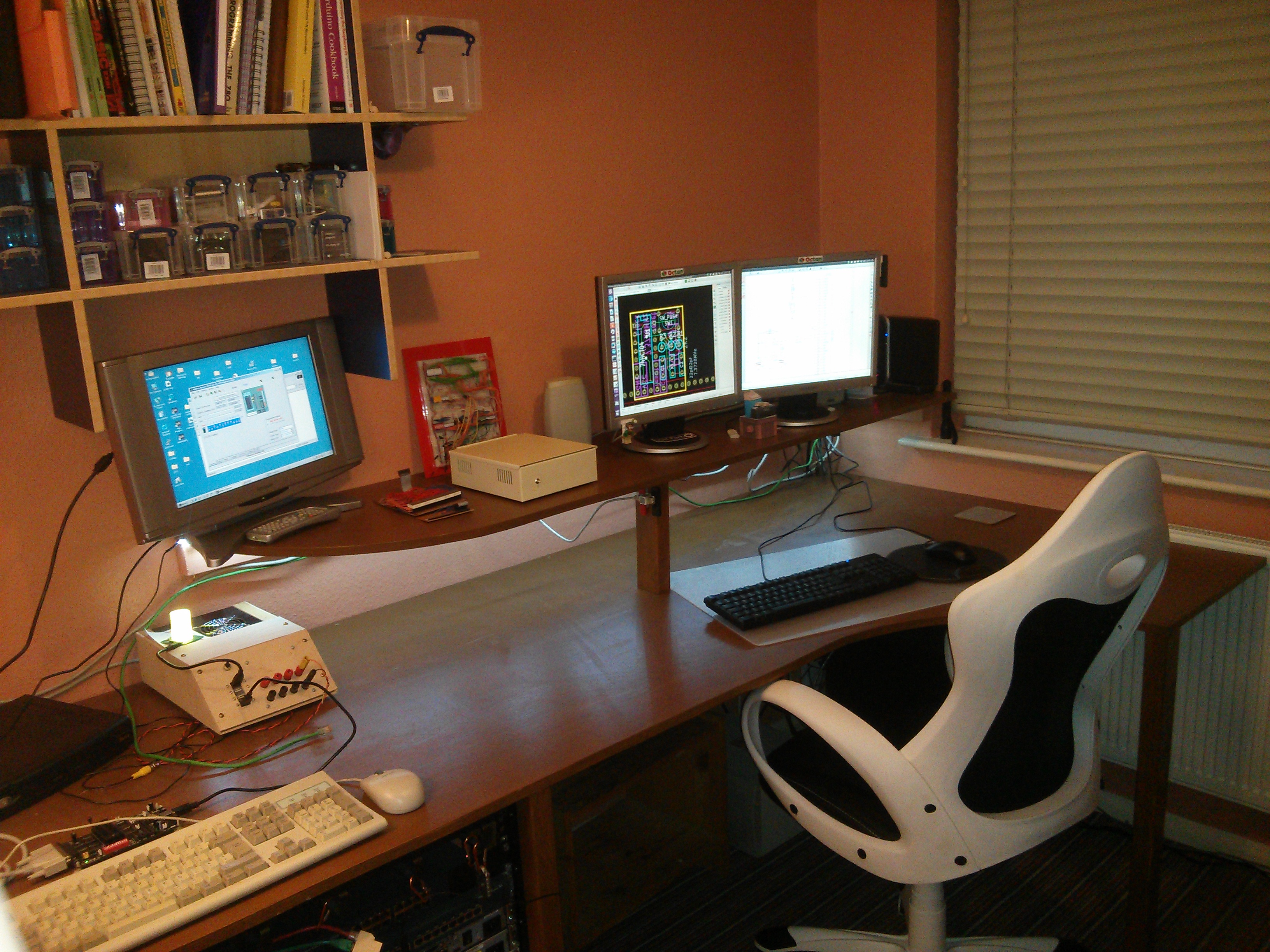
Recently I've read a few posts about other peoples working environments, office setups, man caves or work benches. I've also had a couple of people ask about mine, since I tweeted about the redecoration and overhaul of my old "spare room" as it transformed in to "Man Cave 2.0". I had intended to write it up when it was finished anyway, although, even now, 9 months later, it is still not finished, I am begining to realise that it will never actually be finished but will evolve and morph over time. So, this is a look at the overall design and some of the finer detail in to my Man Cave 2.0 as it stands in August 2014
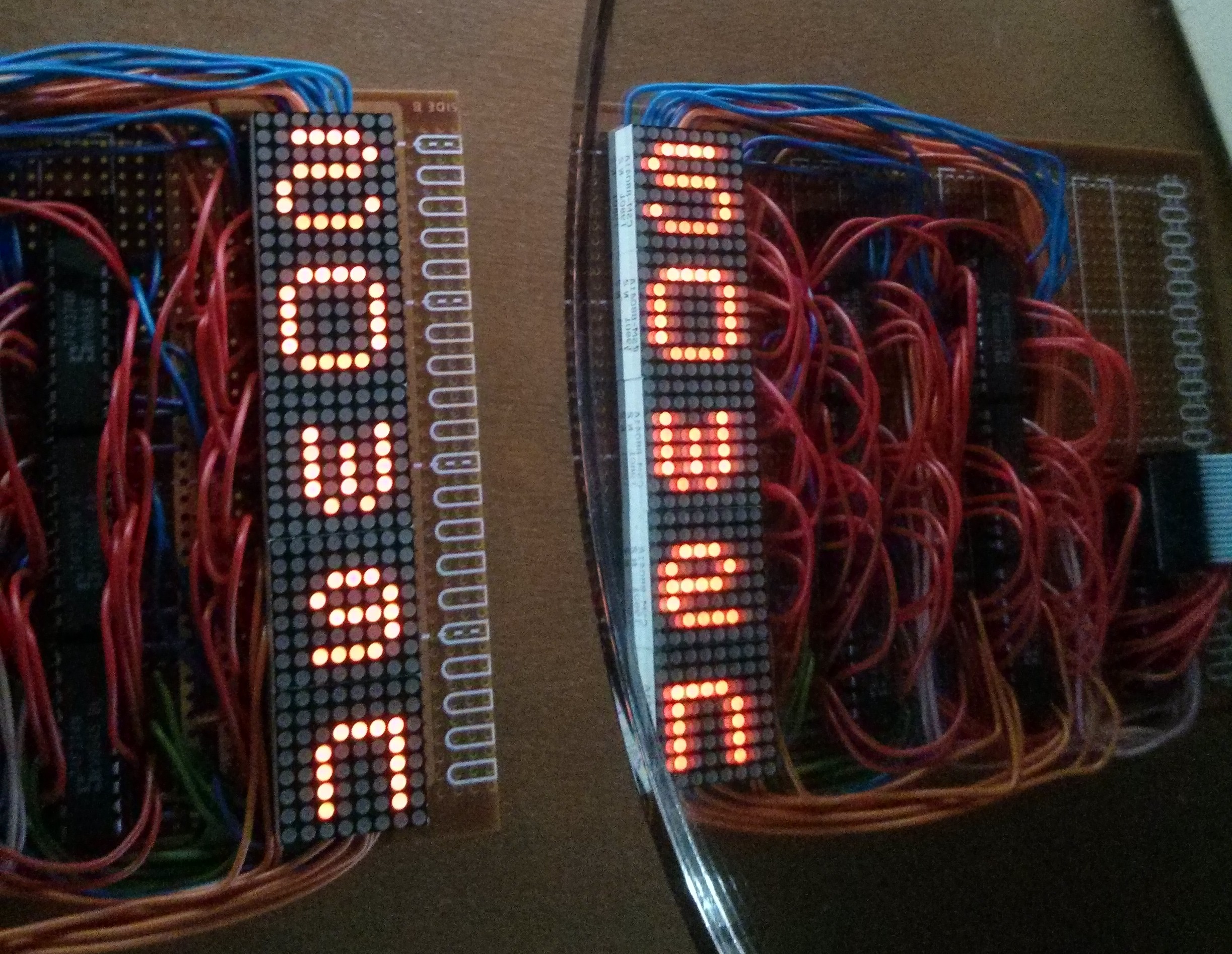
Wow! What an awesome month July has been. The whole Retro Challenge thing has been great, and despite moments of stress or despair, I have thoroughly enjoyed taking part and seeing what everyone else has been up to. Before I sum up my project, I should make a few honourable mentions. Retro Challenge - A huge thanks to Mark and Wgoodf do a great job in hosting this twice a year. Keeping everyone updated via Twitter has worked really well. Cheers guys! Grant Searle is responsible for the general Z80 design I used and also converted MS BASIC from the Nascom to run on this. Really, this project is a test of my understanding of Grants work and seeing how far I can take things. Nottingham Hackspace has an amazing "parts bin" that included the LEDs, Veroboard, case, some of the logic chips and the RAM I used. OSHPark did a great job (for a very good price!) on the PCBs - even if the postal system did keep me on the edge of my seat for a bit! Chris Gammell introductions to KiCad PCB design videos were critical in guiding me through the various stages of board design. Rodney Zaks book Programming the Z80 has been like a bible for me. Combined with a few dozen other resources of Z80 info on line I've been able to at least get the basics assembly language programming. CLRHome is a great online Z80 IDE that can compile assembly language in a variety of output formats including for the ZX Spectrum. I doubt I could have managed this in notepad! All of the other Retro Challenge entrants deserve a mention too, but there's a few that really caught my eye and taught me stuff about their particular approach to RC2014, such as Wgoodf - Turtles all the way down, Ians restoration of Northstar Horizon, Tezzas restoration and programming of Challenger 4P, John finishing work on Fahrfall
Despite a late start today, things have gone well so I actually feel like I'm ahead of the game right now. Certainly not finished, but with most of the major hurdles now behind me, the only thing left is writing a bit of Z80 assembler code. And even that is starting to look manageable.

 Jupiter Cantab was formed in 1982, and Vickers and Altwasser developed the Jupiter ACE. This little computer was a weird mix of ZX80 (vacuum formed white case), ZX81 (black & white low res graphics, 3k memory) and ZX Spectrum (rubber keyboard, small speaker). The one fundamental difference, however, was that it used FORTH instead of BASIC as it's operating system. FORTH was much more efficient than BASIC, and would revolutionise the home computer market... Although history tells us it didn't. Cantab went bust after 18 months and was bought by Boldfield Computing, who went on to sell off the remaining hardware in 1985. Approximately 8000 units were manufactured. When I was offered an original unpopulated Jupiter ACE by John Fletcher, it was too good to turn down...